How to Maintain Artificial Turf: Schedule and Steps
Learn how to maintain artificial turf with a simple schedule for brushing, rinsing, pet cleanup, infill top-ups, stain removal and seasonal care.
You got home, the dog already used the gate path, and last night's storm pasted maple leaves across the yard. The turf is still green. Nobody has to mow it. That does not mean it can wait until spring.
Leaves, urine, and flattened paths are also drainage problems. Debris and packed granules slow water moving through the backing into the base. Keep that path open and the lawn stays clean, upright, and usable for its full service life. This is how to maintain artificial turf without turning it into a weekend project.
Your Artificial Turf Maintenance Schedule
Artificial turf ends mowing, watering, and fertilizing. It is low-maintenance, not maintenance-free. A short routine is what keeps fibers upright, the surface clean, and water moving for the life of the lawn.
| Task | How often | How to do it | Why it matters |
|---|---|---|---|
| Pick up pet waste | Daily, as it happens | Bag solids, then rinse the spot with the hose | Prevents odor, bacteria and stained fibers |
| Remove leaves and debris | Weekly, more often in fall | Leaf blower, plastic rake or soft broom | Stops staining and drainage clogs |
| Rinse the surface | Weekly in dusty or pet areas | Garden hose on a light spray | Washes dust, pollen and residue into the drainage |
| Brush the fibers | Every 1-2 weeks, weekly on high-traffic paths | Stiff nylon-bristle broom, against the grain | Lifts matted blades and redistributes infill |
| Check and top up infill | Inspect each season, top up where blades stay flat | Add thin layers of matching infill, then brush in | Keeps blades upright and surface cushioned |
| Deep clean or power brush | 1-2 times per year | Power broom or professional service | Revives flattened, high-traffic areas |
| Seasonal inspection | Spring and fall | Check seams, edges, drainage and weeds | Catches small repairs before they spread |
| Snow removal | As needed in winter | Plastic shovel, let snow melt when possible | Avoids fiber and backing damage |
Read the table by use, not by the calendar alone. A pet run or play lawn needs daily waste pickup and a weekly rinse. A quiet front yard can stretch brushing to every two or three weeks. Entrances, garden paths, dog routes, and play zones still come first. That is where blades lie down and where water slows if infill packs tight.
After storms and parties
A storm, a backyard party, or a landscaping crew next door earns one extra debris-and-rinse pass the same day. Waiting lets leaves stain fibers and silt settle into the perforations.
Start with the weekly pass, then pets, infill, drainage, stains, and the seasons. Most weeks the whole job is a broom, a hose, and ten quiet minutes.
How to Brush, Rinse and Clear Debris Each Week
A 2019 sports-medicine review is direct about this: synthetic surfaces need regular manufacturer-specified care, including brushing or brooming to raise matted fibers and raking to loosen infill. On fields used every day, those jobs may be needed as often as weekly. The same review says brushing should generally use nylon bristles, and that raking or specialized equipment loosens material below the surface in a way a surface sweep cannot. Grooming does two jobs at once. It stands the pile back up for looks and play, and it puts displaced infill back where traffic kicked it out.
Residential lawns do not need a stadium crew. Occasional rinsing, especially where pets live, leaf removal, and light brushing on busy paths cover the week. Sports and commercial installs follow a tighter schedule based on hours of use, weather, and the maker's sheet.
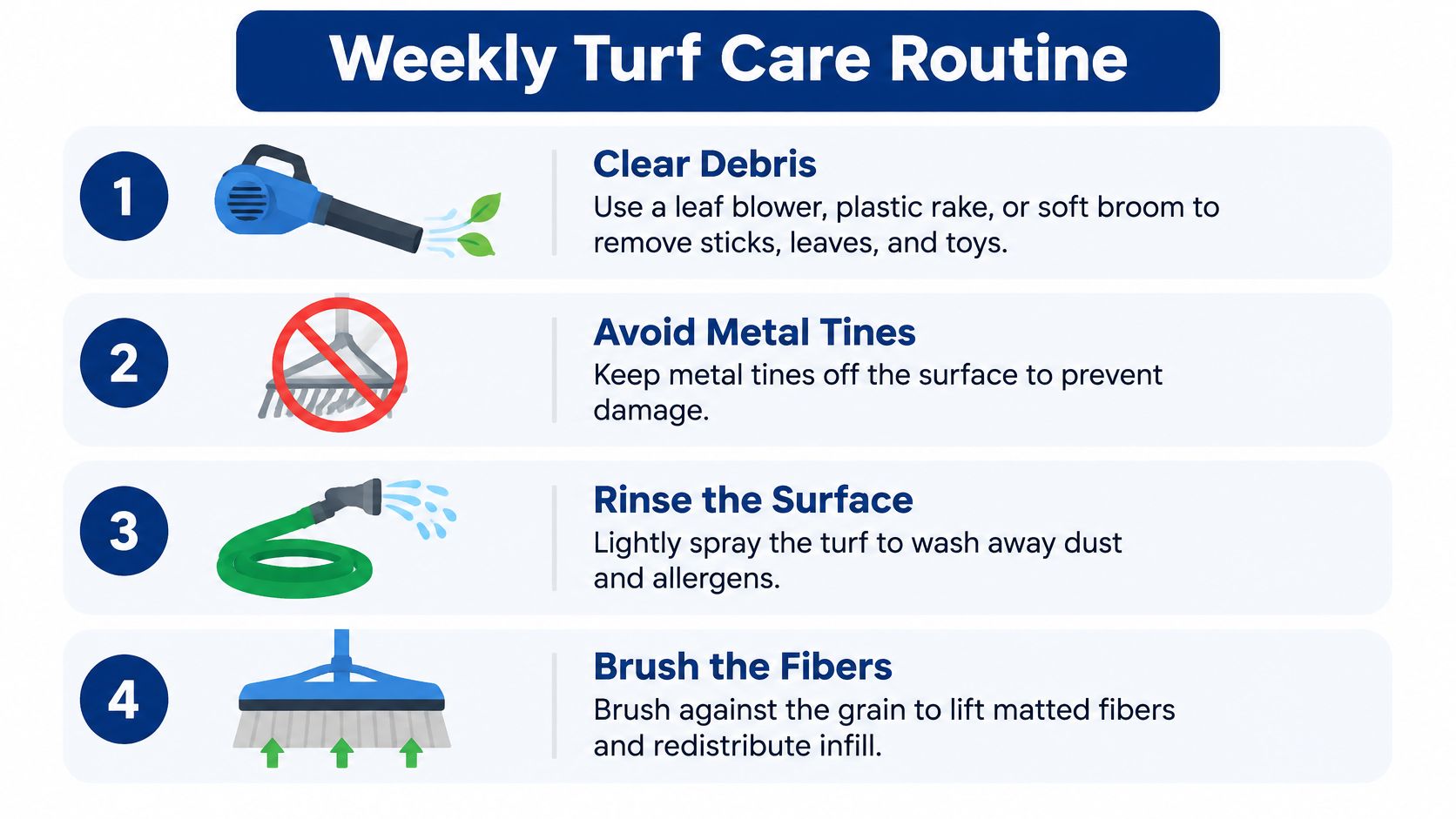
The weekly pass
- Clear debris first. Run a leaf blower, a plastic rake, or a soft broom. Pick up sticks, leaves, and toys before you brush. Metal tines snag fibers and the backing, so they stay in the garage.
- Brush against the grain. A stiff nylon-bristle broom, never a wire brush, lifts blades that foot traffic has pushed over. Cross-brush paths, entrances, and play zones so you are not training the pile to lean one way. On a heavily used surface, plan on this every week.
- Rinse on a light spray. A garden hose, not a pressure washer, washes dust, pollen, and fine grit down through the drainage. Weekly in dusty yards and pet areas. Less often on a clean ornamental lawn.
- Spot-clean while you are out there. Sticky spills and pet marks are easier before they dry into the infill.
- Glance at seams, edges, and low spots. Movement, a lifted edge, or a shiny wet patch is an early warning, not a cosmetic flaw.
Tool rule: Nylon bristles, plastic rakes, and plastic shovels only. Wire and metal are how small chores become seam repairs.
Busy week? Debris off, one cross-brush of the main path, a quick rinse. That two-minute version still protects drainage better than a deep clean you keep postponing.
Pet Waste Cleanup and Odor Control
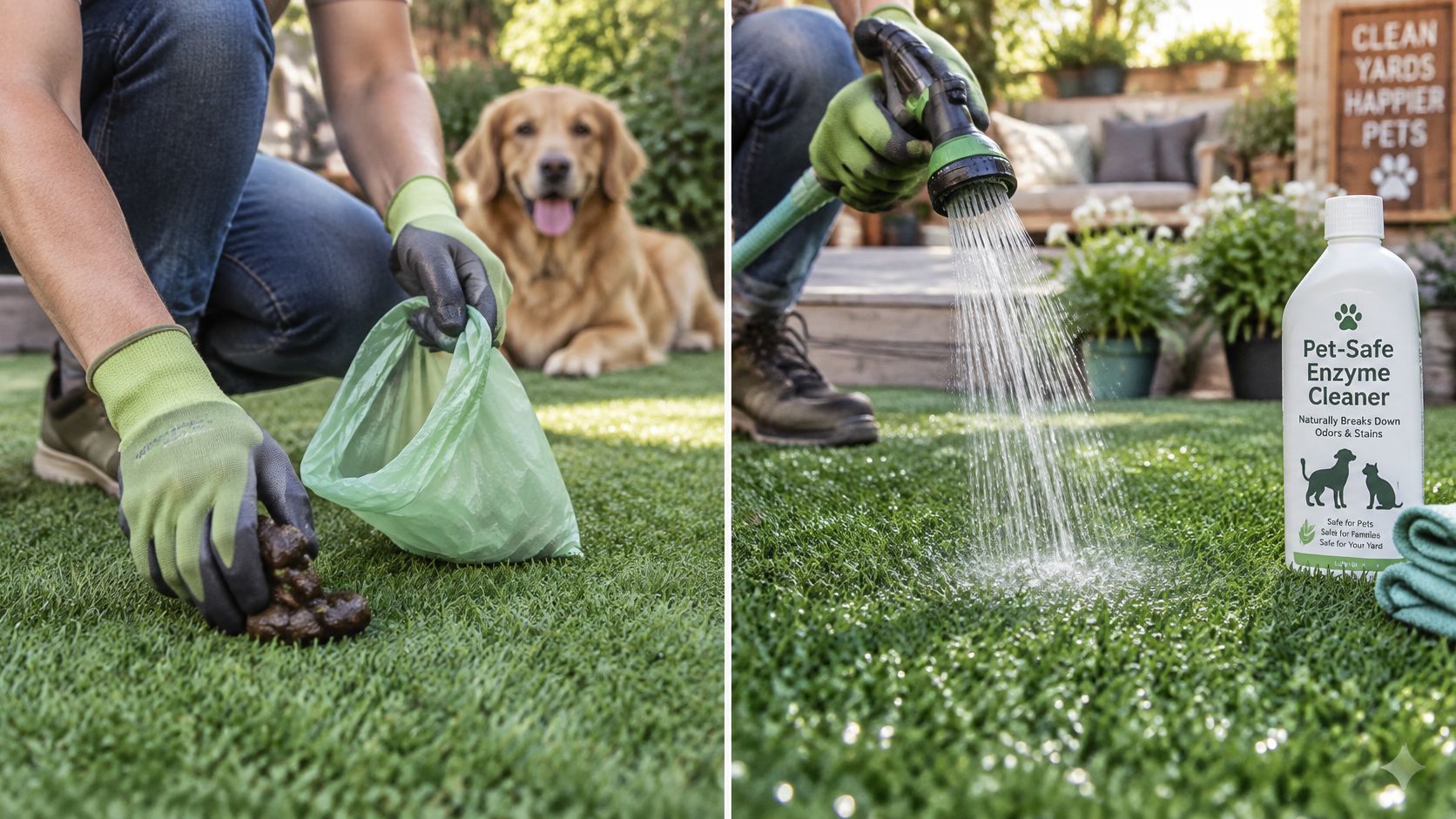
Pet turf does not need mowing, fertilizer, or routine lawn chemicals. It does need a fast cleanup. Quality pet turf has a built-in drainage system that lets liquids pass through quickly, so a same-day rinse stops odor instead of covering it up. A run cleaned daily rarely needs a strong product.
- Bag solids as soon as you see them, the same way you would on any lawn. Waiting lets residue work down between fibers.
- Rinse that spot the same day with a garden hose on a light spray so urine soaks through the permeable backing into the base.
- Treat lingering odor with an enzyme cleaner made for artificial turf, or a 50/50 mix of white vinegar and water. Let it dwell for the time on the label, then rinse until the smell is gone.
- Match the product to the system. Fiber, backing, infill, and drainage all have to tolerate it. The harsh cleaners to skip are in the stain guide later.
- Once a month, give pet zones a deeper rinse and a brush-up so fibers stand and organic film does not pack the pile.
Ohio EPA guidance treats routine sweeping, blowing, or vacuuming as protection for both the turf and stormwater function, and it says to keep infill out of storm drains. Pet wash water should not run to storm sewers or streams. Collect it for sanitary disposal, or let it infiltrate on suitable ground. A hard blast from a pressure washer is the wrong tool. It drives waste and loose granules toward the street.
Two or three dogs
Add a midweek enzyme pass. Check shaded corners and the entrance first. Moisture lingers there, and that is where odor shows up before the open yard smells at all.
Infill Top-Ups and Flattened Turf Fixes
Infill weighs the turf down, props the blades, and cushions impact. When it runs low or packs hard, the lawn looks flat and feels firm underfoot. You will see blades that stay down after a good brushing, a surface that no longer gives, and granules tracked onto the patio or piled at the edge. That is a maintenance issue, not just a bad hair day for the pile. If you are choosing a top-up, match the artificial turf infill already in the lawn so the new layer behaves like the old one.
Research summarized by Pennsylvania State University reports that infill systems typically need brushing about once per week to keep pile fibers upright and to loosen granules before the surface compacts. In a Penn State study, grooming lowered measured surface hardness across all tested treatments, cutting Gmax values by an average of more than 20 Gmax units. Gmax is the force-acceleration measure used in sports-surface testing. Higher numbers mean a harder impact and can signal weaker playability or safety. Foot traffic pushes fibers down into the infill, which is why a path looks flattened or dull. Loosening and spreading the granules brings the surface back to a more even feel.
Top-up steps
- Inspect entrances, play paths, and the routes pets use.
- Brush fibers upright first so new infill falls between blades instead of sitting on top.
- Spread a thin, even layer of matching infill with a drop spreader. Thick dumps create hard spots.
- Brush against the grain until blades stand through the new layer.
- Recheck after the next rain and repeat only on the worn patches.
Matting from heavy traffic or weight is not covered by the warranty. It can be fixed by re-infilling and power brooming, for a service fee. If a nylon broom will not lift a wide flat area, that power-broom and re-infill visit is the next step, not a harder brush and more force.
Drainage Checks and Stormwater Protection
Accumulated debris, compacted infill, and granules washed into dips cut permeability. The lawn stays wetter, and more water heads for the street instead of the base. The artificial grass base layer only works if the surface above it stays open.
After every heavy rain
- Walk the lawn within an hour of the rain stopping. Note any ponding that is still there.
- Look for sediment or infill in low spots and along the perimeter.
- Clear perimeter drain outlets by hand. Leaves and soil are what back them up.
- Sweep, blow, or vacuum loose infill back onto the turf. Do not leave it in the gutter or a storm inlet.
| What you see | Likely cause | What to do |
|---|---|---|
| Water pools for hours after rain | Clogged perforations or compacted infill | Remove debris, brush and loosen infill; call a pro if it persists |
| Slow drainage at low points | Sediment or infill washed into dips | Rake out sediment, re-infill and brush in |
| Water backs up at the edge | Blocked perimeter drain | Clear the outlet by hand; avoid pressure washing |
| Granules on patios or in gutters | Displaced infill from traffic or runoff | Sweep back onto turf and keep out of storm drains |
Rinse lightly and let water soak into the yard. Do not aim the hose at the curb. Pet-area wash water stays out of storm sewers and streams. Block inlets before any cooling rinse or wash, and let suitable ground take the water, or collect it for sanitary disposal.
More water is not better maintenance. A pressure washer pushes waste, infill, and grit into stormwater pathways.
Match the cleaning method to the drainage design, local rules, and whether pets use the surface. A lawn that ponds after ordinary rain needs a look at the base, not another hose session.
Removing Stains Without Damaging Turf
Three habits stop most stains from setting. Act the same day. Blot liquids instead of wiping them outward. Lift solids before any cleaner touches them.
For ordinary spills, mix mild dish soap in warm water. Work from the outside of the mark inward so you do not spread it, then rinse until no suds remain. Speed matters because a spill that sits can migrate into the infill and turn into odor or a slow-drain patch.
Florida Extension guidance notes that synthetic turf does not need supplemental irrigation, while manufacturers commonly recommend weekly washdowns to clear dust, pet waste, and odor-causing residue. After you wash, confirm water drains freely. Standing water points to clogged perforations, compacted infill, a weak subbase, or settlement. At least each season, check for weeds, algae, moss, lifted edges, wrinkles, loose seams, and low infill, especially in damp shade.
| Stain | How to treat it | What to avoid |
|---|---|---|
| Food and drink spills | Blot, wash with mild dish soap and warm water, rinse until suds are gone | Scouring pads and bleach |
| Oil and grease | Blot excess, work in mild degreasing dish soap, rinse well | Solvent cleaners and gasoline |
| Chewing gum or sticky candy | Harden with ice, lift with a plastic scraper | Metal scrapers and pulling at fibers |
| Blood | Cold water and mild soap immediately | Hot water, which sets the stain |
| Moss and algae in shade | Wash with mild soap, then improve sunlight and drainage | Wire brushes and undiluted bleach |
What never belongs on the lawn
Skip chlorine bleach, harsh solvent cleaners, wire brushes, and a pressure washer held close to the pile. Those abrade polyethylene fibers, kick infill around, damage backing, or drive dirt deeper. Use only a cleaner labeled safe for the fiber, the backing, the infill, and the drainage, at the dilution and dwell time on that label.
A lawn that looks clean while an edge is lifting or a corner stays wet is the failure I would rather catch early. A settled or contaminated patch is a rebuild. A rinsed stain and an open drain are an afternoon.
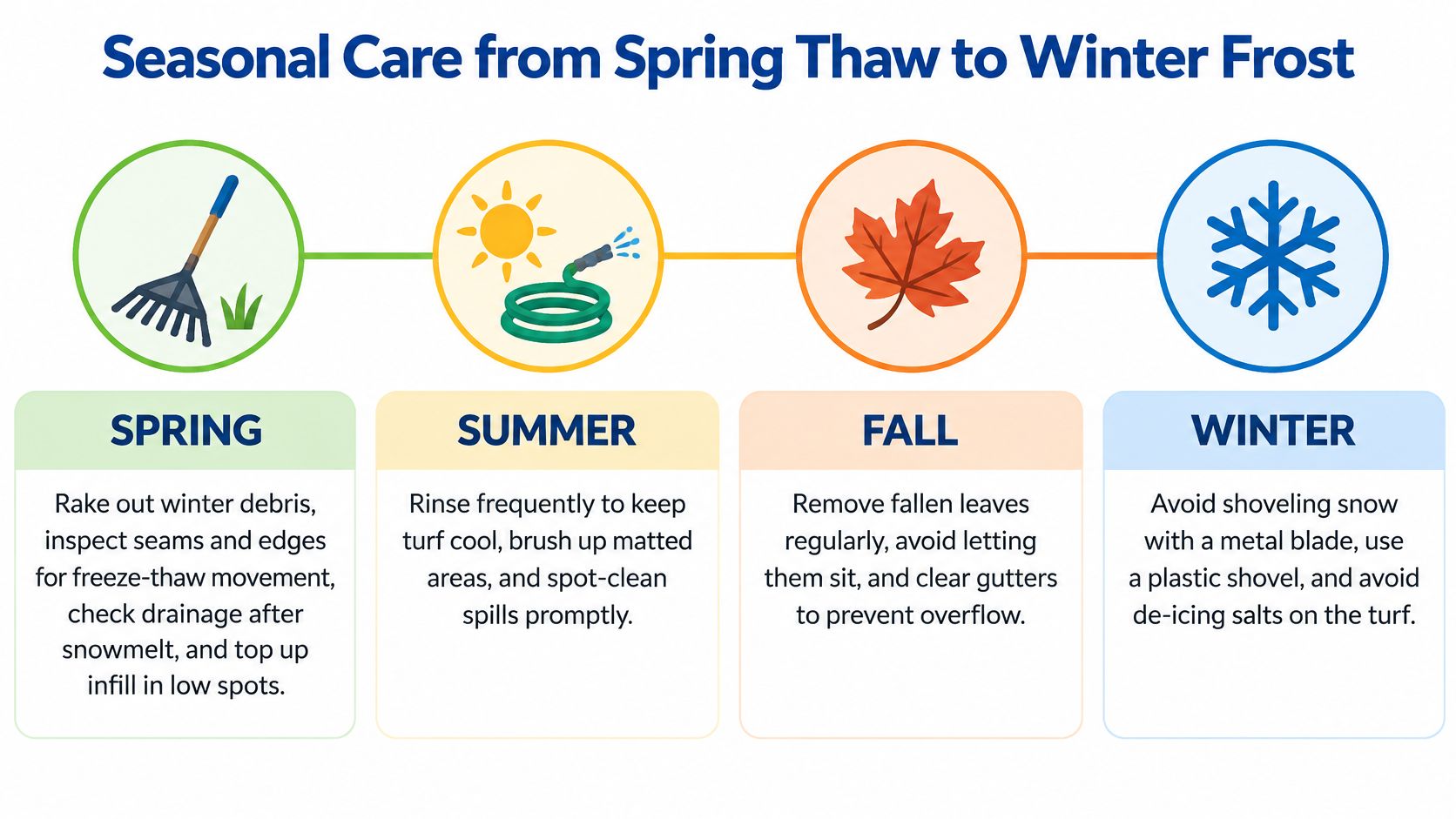
Seasonal Care From Spring Thaw to Winter Frost
Spring
Rake out winter debris once the ground firms up. Walk seams and edges for freeze-thaw movement. After snowmelt, watch whether water leaves the lawn or sits in a corner. Top up infill where winter traffic packed the paths. That first dry weekend is also when moss shows in shade if leaves sat all winter.
Summer
Fairfax County notes that synthetic turf can run hotter than dirt or natural grass on sunny days and may be too hot for play. Effective controls are hydration, frequent breaks, shade, footwear, and watching for heat-illness symptoms. Check the surface before kids or pets use it. Shift play to morning and evening. A brief rinse can cool the pile, but shade and timing beat assuming one spray fixes a hot afternoon.
Cooling water can carry pet waste and loose infill toward storm drains. Block inlets first, and keep pet-area wash water out of surface waters. Polyethylene artificial grass still needs that check. Low maintenance is not the same as no monitoring.
Fall
Pull leaves weekly before they stain fibers or clog perforations. After a heavy acorn or seed drop, brush so shells do not grind into the infill. Clear gutters so overflow does not dump silt along the edge.
Winter
Let snow melt when you can. When you must clear a walk, use a plastic shovel and take thin lifts. Never use rock salt or de-icing chemicals. They damage fibers, backing, and drainage performance.
Some rippling in a heat wave or a cold snap is normal. The rubber backing expands and contracts with temperature, which wrinkles the surface in warmer or colder weather.
Brush ripples out. Re-secure an edge only if it stays loose after the weather settles.
When to DIY and When to Call a Turf Pro
Handle the routine yourself. Debris pickup, weekly brushing, rinsing, pet cleanup, and small stains take a few minutes most weeks, plus one deeper pass in spring and fall. Every chore protects drainage: clear perforations and loose infill let stormwater pass through instead of pooling on the surface.
Call a turf professional when the problem sits below the surface. Widespread matting a broom will not lift, seams that are opening, ponding that remains after you clear drains, and large infill top-ups all need equipment most garages lack. High-traffic zones benefit from a yearly power-broom, the same pass a pro uses to lift matted fibers and work fresh infill down to the backing.
The payoff is a surface that outlasts the effort. The routine replaces mowing and fertilizing, and synthetic turf needs no supplemental irrigation. Commercial turf lasts 15 to 20 years with proper care, and pet turf can hold its look and function for well over a decade on the same terms. Kept clean and draining, the yard stays usable year-round.
Planning a new surface or replacing one near the end of its service life? Waterloo Turf Indianapolis designs and installs synthetic turf for yards, pet runs, play spaces, and commercial sites across the Indianapolis metro, with site assessment and drainage planning included. Visit Waterloo Turf Indianapolis to request a site assessment and installation quote.